

11 May 2026
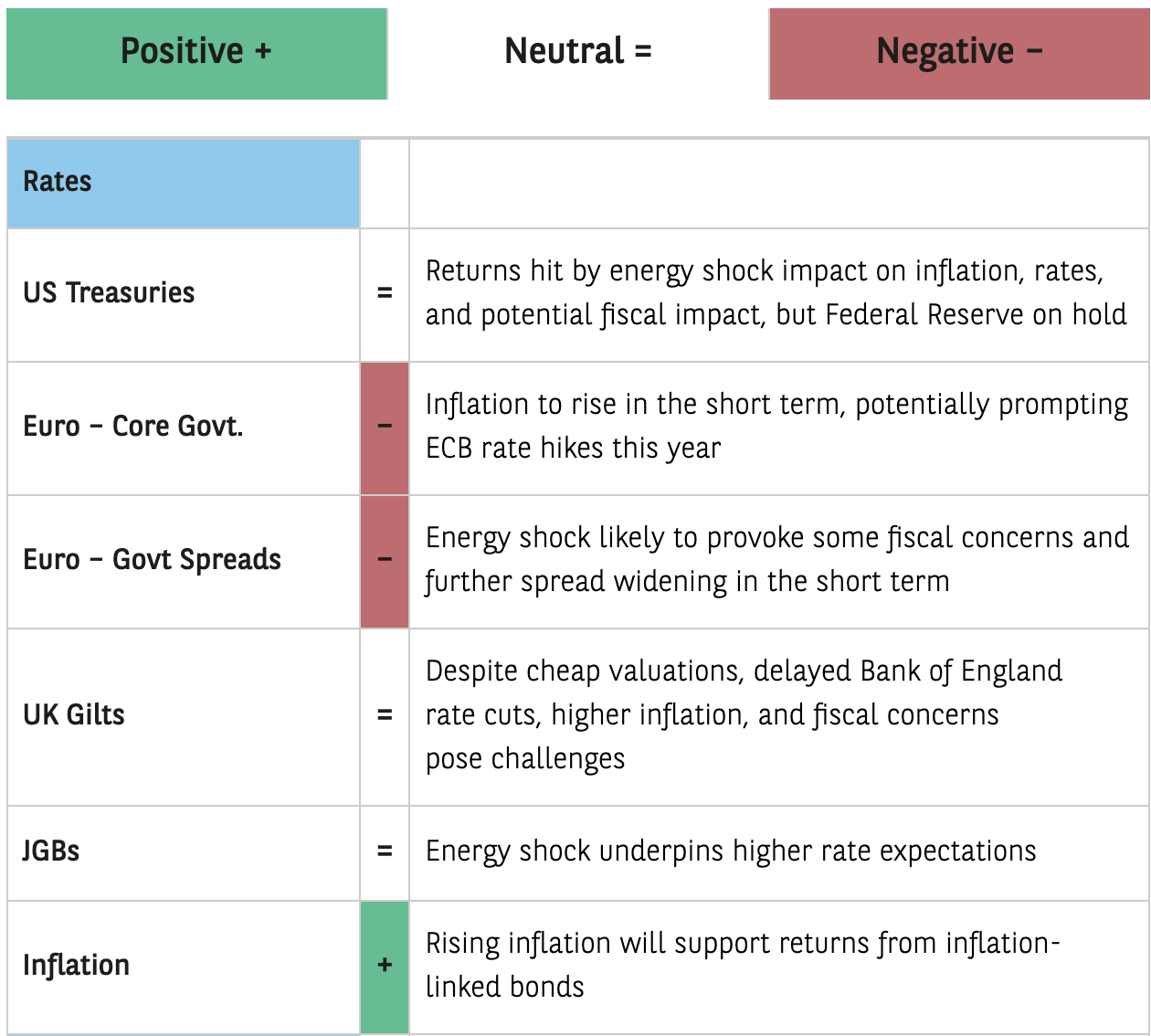
The prospect of higher inflation, resulting from the Middle East conflict, has shifted interest rate expectations; in turn, fixed income market returns have fallen. Short maturity inflation-linked bonds could provide some defence against higher inflation and short-term rates as they derive most of their return from actual inflation with less sensitivity to interest rate volatility.
As a result, investors typically experience less drawdown than in a conventional bond strategy, which has been the case in recent weeks.
Money market and floating rate securities may also provide some defence when short-term rates are rising. These cash-like assets can help give investors potentially greater security in the short term and provide liquidity to add to cheaper, riskier assets going forward.
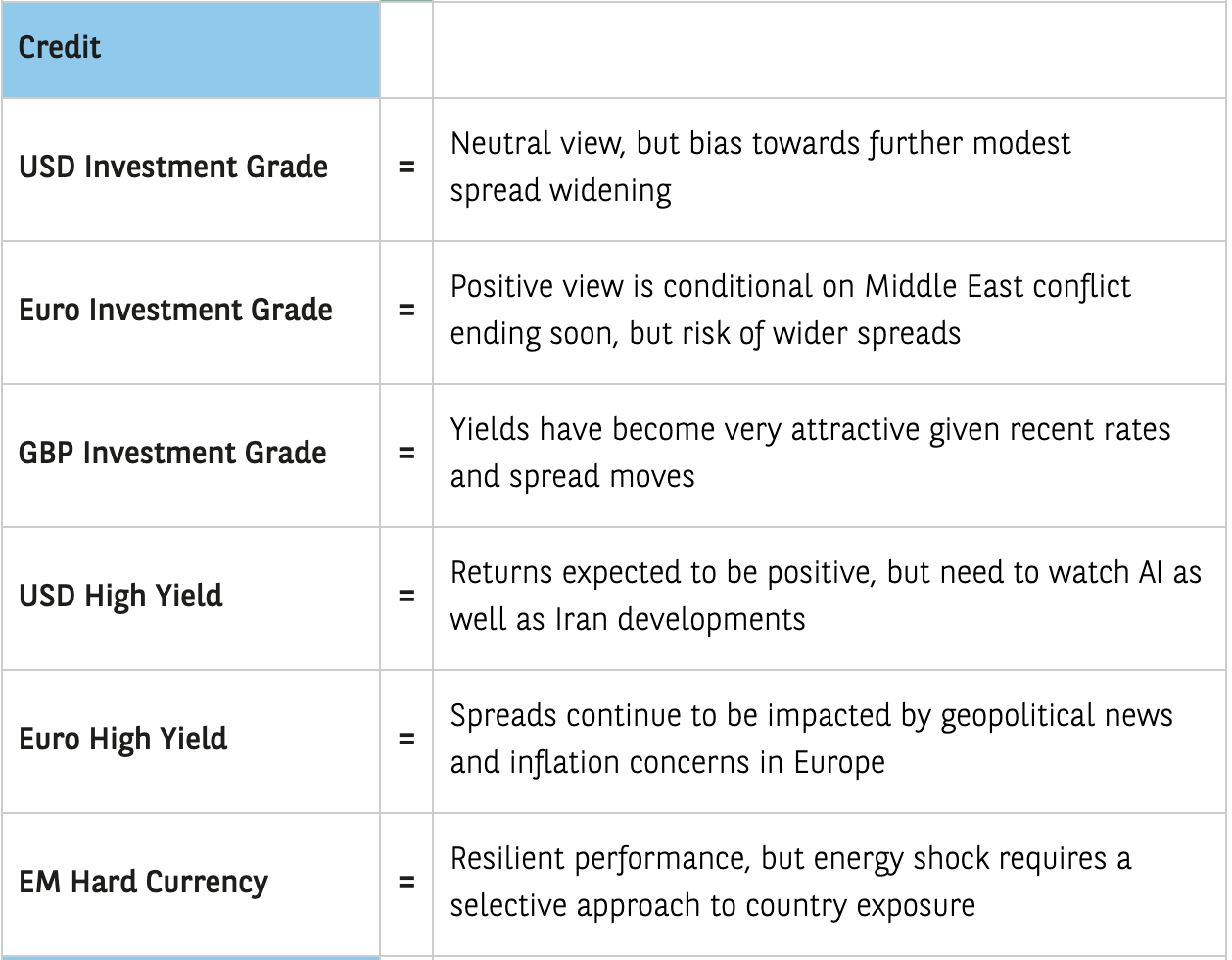
A prolonged conflict would worsen the inflation and growth outlook, sustaining interest rate volatility. However, de-escalation should reveal potential value opportunities in credit markets, where spreads have moved wider and all-in yields are at levels last seen in the second quarter of 2025.
This scenario would also reduce the need for central banks to tighten policy, allowing short-term interest rate expectations to fall, potentially helping boost returns for short-duration fixed income.
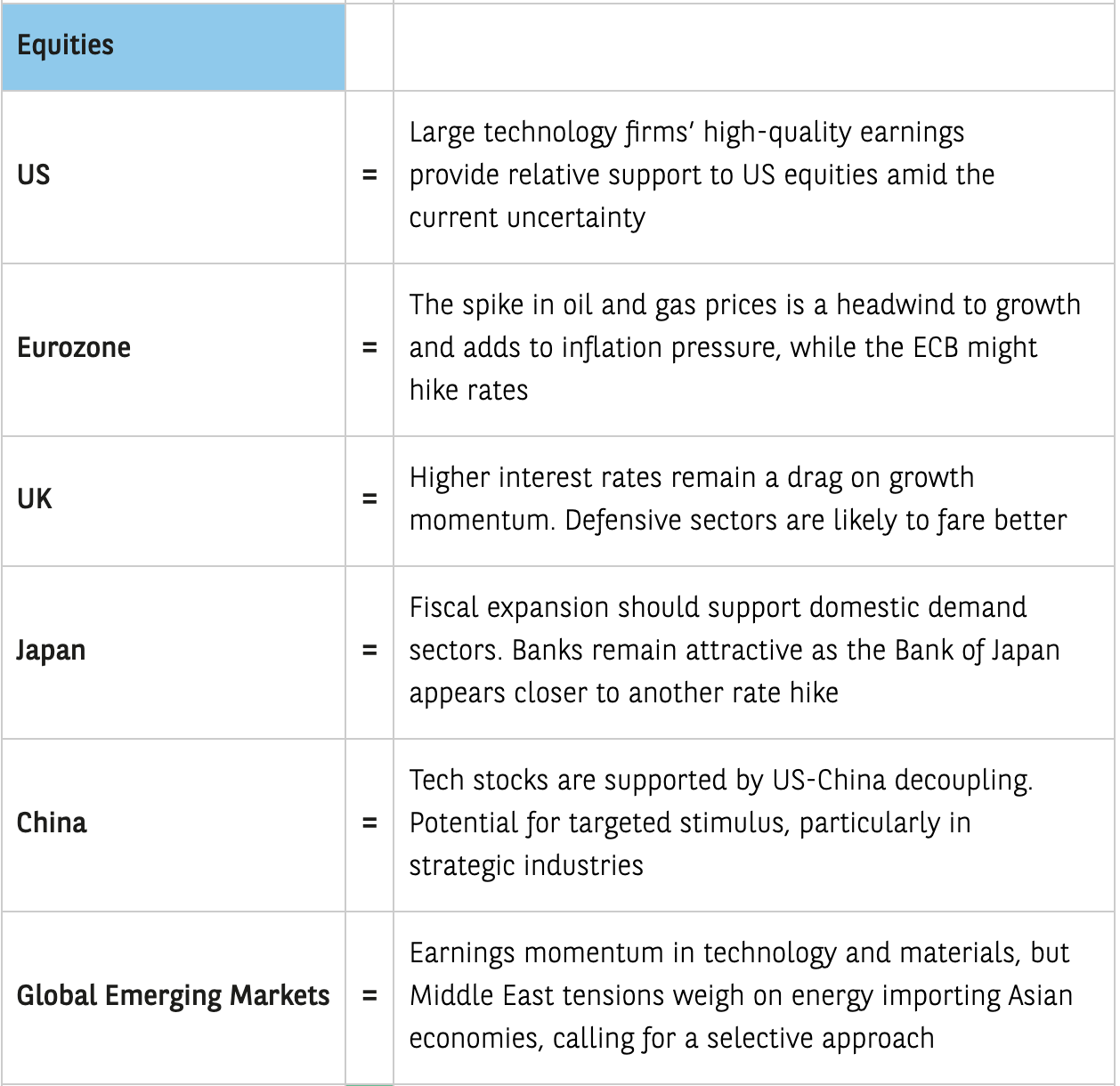
By late March, some four weeks into the Middle East conflict, global equities had fallen by more than 5%.1 Oil-sensitive industries such as capital goods contributed a lot to the decline, only partly offset by gains in oil stocks.
Industries which dominated returns in February, however, have arguably had greater impact. Financials contributed the most to the fall in the index, partly due to worries about private credit, while technology hardware and semiconductor stocks reversed much of their February gains.
Equities staged a modest rebound, outperforming global fixed income (as measured by the Bloomberg Multiverse index), on hopes for a negotiated end to the war. The gains were led by capital goods, semiconductors and financials.
We remain cautious on the outlook, but the industry dynamics within equities suggest that investors still need to be as keenly focused on artificial intelligence-related industries as they are on oil-linked ones, as they consider how to position themselves for the longer term.
The MSCI China index has outperformed global indices by over 1%, while the CSI 300 has been broadly flat since the Iran conflict began.2 There are several reasons for this resilience
The inflationary impact will mainly be seen in the producer price index, which is currently stuck in deflation. However, PPI has been highly correlated with Chinese corporate revenues, so a PPI recovery should boost company revenue growth.
If China can sustainably enter an inflationary environment, there is likely to be upside to share prices, as has been the case in Japan. In our view, China’s domestic A-shares seem to have more downside protection than those traded in Hong Kong, or the US, as a result of potential government fund purchases, ample liquidity, and lower correlation with global indices. Furthermore, lower oil exposure and a large current account surplus (2% of GDP) underpin the exchange rate.
Opinions draw on investment team views and are not intended as asset allocation advice.

* BNP Paribas Asset Management has identified several themes, supported by megatrends, that companies are tapping into which we believe are best placed to navigate the evolving global economy: Automation & Digitalisation, Consumer Trends & Longevity, the Energy Transition as well as Biodiversity & Natural Capital; source: BNP Paribas Asset Management
[1] MSCI All Country World IMI index in US dollar terms down 5.2% as of 25 March 2026
[2] Source: MSCI / BNP Paribas AM as of 25 March 2026