

09 Apr 2026
Global markets have entered a period of heightened volatility following the latest escalation of tensions involving Iran, as energy prices and risk assets adjust to the prospect of a more sustained geopolitical conflict. Against this backdrop, our senior investment team assess the evolving macro risks, outline potential scenarios and discuss how portfolios are positioned to navigate near-term uncertainty while remaining focused on longer-term fundamentals.
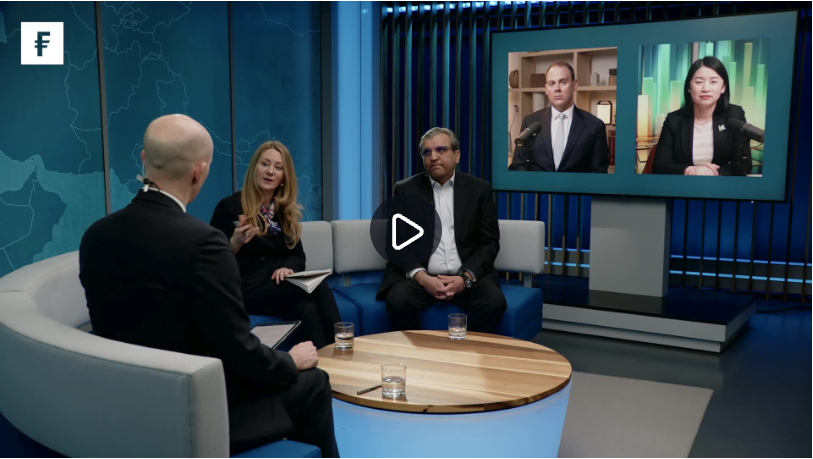
Salman Ahmed, Global Head of Macro and Strategic Asset Allocation
Markets have moved quickly from reacting to headlines to pricing a more sustained geopolitical event. What initially appeared consistent with past episodic Middle East flare ups has evolved into a more complex phase of escalation.
Energy remains the central transmission channel. The issue is not only production but transit. Around one fifth of global oil and refined product flows pass through the Strait of Hormuz. While it has not been formally mined or blocked, traffic has slowed materially, embedding a geopolitical premium into oil, most visibly into Brent.
Within the scenario framework outlined, markets have shifted from assuming a contained exchange to pricing a more sustained escalation, while full disruption of the Strait remains a tail risk. Duration is the key macro variable. Oil would need to remain at elevated levels for three to four months to materially affect inflation and growth. A temporary spike is manageable. A sustained period of higher prices would feed through inventories, margins and purchasing power, tightening financial conditions more meaningfully.
Unlike 2022, which marked a structural recalibration of Europe’s energy relationships, the current episode is better characterised as a disruption. Trade flows are likely to resume once tensions subside.
Political constraints also matter. The US is an energy exporter and retains tools to manage domestic price pressures. In an election year, gasoline prices are sensitive, and equity markets act as an additional constraint. For now, those thresholds have not been breached.
Niamh Brodie-Machura, Chief Investment Officer, Equities
Equities entered 2026 with multiples above long-term averages, particularly in the US, supported by expectations of robust earnings growth and AI-driven investment.
Geopolitical escalation requires reassessment of the appropriate risk premium. However, short lived geopolitical shocks tend to increase volatility and dispersion rather than permanently impair equity markets.
The key question is duration, particularly given the transmission channel from energy prices into inflation and interest rates. A prolonged rise in oil and gas prices would compress margins in energy intensive sectors and erode purchasing power. The regional impact is asymmetric. The US, as an energy exporter, is relatively insulated. Europe and much of Asia are net importers.
Sector effects are emerging. Airlines face higher fuel costs and disruption at key Middle Eastern transit hubs, while shipping markets are seeing firmer freight rates. Industrial companies warrant close attention given their exposure to input cost pressures.
The AI investment cycle remains a swing factor. Large technology companies are not indifferent to energy costs, particularly where gas and electricity prices influence data centre competitiveness.
In the absence of prolonged energy disruption, earnings growth is likely to remain the primary driver of returns. Diversification across regions and sectors remains central.
Matthew Quaife, Global Head of Multi Asset
The conflict has occurred against a backdrop of resilient global growth and ongoing investment momentum, particularly in the US. AI led capital expenditure continues to underpin nominal growth.
Markets entered this episode with constructive sentiment and extended exposures, contributing to sharper short-term adjustments.
Within multi asset portfolios, the approach has been to stay invested given resilient fundamentals, while looking to add selectively to areas that have been sold off due to positioning.
Safe havens have not behaved uniformly. Gold, where positioning had been strong, has softened in recent days but remains an important defensive allocation, and is being added to selectively. The US dollar has strengthened in line with risk aversion, though this may partly reflect prior positioning. Treasury markets have been volatile, prompting a broader search for diversified sources of defensiveness.
Regional differentiation remains central. The US benefits from relative energy independence and robust nominal growth. Europe appears more exposed in a prolonged energy shock. Japan, which has corrected sharply, retains constructive medium-term drivers.
Lei Zhu, Head of Asian Fixed Income
Oil remains central to fixed income positioning. Across most developed markets, duration exposure is neutral to underweight given the risk that sustained higher oil prices could reprice inflation expectations. Short-dated investment grade credit is favoured as a defensive allocation.
Asia presents a differentiated picture. Regional currencies have retraced some gains, though higher quality currencies have behaved relatively defensively. China stands apart. With inflation subdued and CPI at 0.2%, there is scope for policy easing. Chinese government bonds have behaved as a safe haven and duration is overweight relative to other markets.
Credit spreads in Asia have widened in an orderly fashion. Investment grade spreads have moved modestly, while high yield has seen contained widening. With a structural shortage of strong credits in the region, more meaningful spread widening would likely attract demand from investors seeking diversified income opportunities.
Currency pressures in emerging markets also warrant attention. If central banks are forced to draw down foreign exchange reserves to stabilise exchange rates, this could feed back into global bond markets. That said, the emerging market universe is far from uniform, with energy exporters benefiting from higher prices while importers face greater pressure.
The path of oil prices remains the clearest indicator of market assessment. Brent is bearing the geopolitical premium, while US crude prices remain relatively better anchored given domestic supply flexibility.
Political signalling, particularly in the US, is also critical given domestic sensitivity to energy prices.
For now, markets are pricing a prolonged risk premium rather than a systemic supply shock. The duration of elevated oil prices and developments around the Strait of Hormuz will determine whether the macro impact remains contained.
Portfolios should remain diversified and selective, anchored in medium-term fundamentals while retaining flexibility should elevated oil prices persist.
Important information
This material is for Institutional Investors and Investment Professionals only, and should not be distributed to the general public or be relied upon by private investors.
tion purposes only and is intended only for the person or entity to which it is sent. It must not be reproduced or circulated to any other party without prior permission of Fidelity.
This material does not constitute a distribution, an offer or solicitation to engage the investment management services of Fidelity, or an offer to buy or sell or the solicitation of any offer to buy or sell any securities in any jurisdiction or country where such distribution or offer is not authorised or would be contrary to local laws or regulations. Fidelity makes no representations that the contents are appropriate for use in all locations or that the transactions or services discussed are available or appropriate for sale or use in all jurisdictions or countries or by all investors or counterparties.
This communication is not directed at, and must not be acted on by persons inside the United States. All persons and entities accessing the information do so on their own initiative and are responsible for compliance with applicable local laws and regulations and should consult their professional advisers. This material may contain materials from third-parties which are supplied by companies that are not affiliated with any Fidelity entity (Third-Party Content). Fidelity has not been involved in the preparation, adoption or editing of such third-party materials and does not explicitly or implicitly endorse or approve such content. Fidelity International is not responsible for any errors or omissions relating to specific information provided by third parties.
Fidelity International refers to the group of companies which form the global investment management organization that provides products and services in designated jurisdictions outside of North America. Fidelity, Fidelity International, the Fidelity International logo and F symbol are trademarks of FIL Limited. Fidelity only offers information on products and services and does not provide investment advice based on individual circumstances, other than when specifically stipulated by an appropriately authorised firm, in a formal communication with the client.
Europe: Issued by FIL Pensions Management (authorised and regulated by the Financial Conduct Authority in UK), FIL (Luxembourg) S.A. (authorised and supervised by the CSSF, Commission de Surveillance du Secteur Financier), FIL Gestion (authorised and supervised by the AMF (Autorité des Marchés Financiers) N°GP03-004, 21 Avenue Kléber, 75016 Paris) and FIL Investment Switzerland AG.
UAE: The DIFC branch of FIL Distributors International Limited is regulated by the DFSA for the provision of Arranging Deals in Investments only. All communications and services are directed at Professional Clients and Market Counterparties only. Persons other than Professional Clients and Market Counterparties, such as Retail Clients, are NOT the intended recipients of our communications or services. The branch is established pursuant to the DIFC Companies Law, with registration number CL2923, as a branch of FIL Distributors International Limited, registered in Bermuda. FIL Distributors International Limited is licensed to conduct investment business by the Bermuda Monetary Authority.
In Hong Kong, this material is issued by FIL Investment Management (Hong Kong) Limited and it has not been reviewed by the Securities and Future Commission.
FIL Investment Management (Singapore) Limited (Co. Reg. No: 199006300E) is the legal representative of Fidelity International in Singapore. This document / advertisement has not been reviewed by the Monetary Authority of Singapore.
In Taiwan, Independently operated by Fidelity Securities Investment Trust Co. (Taiwan) Limited 11F, No.68, Zhongxiao East Road, Section 5, Taipei 110, Taiwan, R.O.C. Customer Service Number: 0800-00-9911.
In Korea, this material is issued by FIL Asset Management (Korea) Limited. This material has not been reviewed by the Financial Supervisory Service, and is intended for the general information of institutional and professional investors only to which it is sent.
Issued in Japan, this material is prepared by FIL Investments (Japan) Limited (hereafter called “FIJ”) based on reliable data, but FIJ is not held liable for its accuracy or completeness. Information in this material is good for the date and time of preparation, and is subject to change without prior notice depending on the market environments and other conditions. All rights concerning this material except quotations are held by FIJ, and should by no means be used or copied partially or wholly for any purpose without permission. This material aims at providing information for your reference only but does not aim to recommend or solicit funds /securities.
For information purposes only. Neither FIL Limited nor any member within the Fidelity Group is licensed to carry out fund management activities in Brunei, Indonesia, Malaysia, Thailand and Philippines.
FIL Investment Management (Australia) Limited (ABN 34 006 773 575, AFSL No. 237865) and FIL Responsible Entity (Australia) Limited (ABN 33 148 059 009, AFSL No. 409340) are the legal representatives of Fidelity International in Australia. This is intended as general information for a person who is a 'wholesale client' under section 761G of the Corporations Act 2001 (Cth) and has been prepared without taking into account any person’s objectives, financial situation or needs. Not for distribution to or use by retail clients.
GCT260315GLO